A workspace that thinks with you — from morning planning to agent delegation to knowledge that compounds.
Dashboard, task management, and planning tools. See what's due, filter by project or priority, drag tasks across kanban columns. Everything syncs to markdown files on disk.
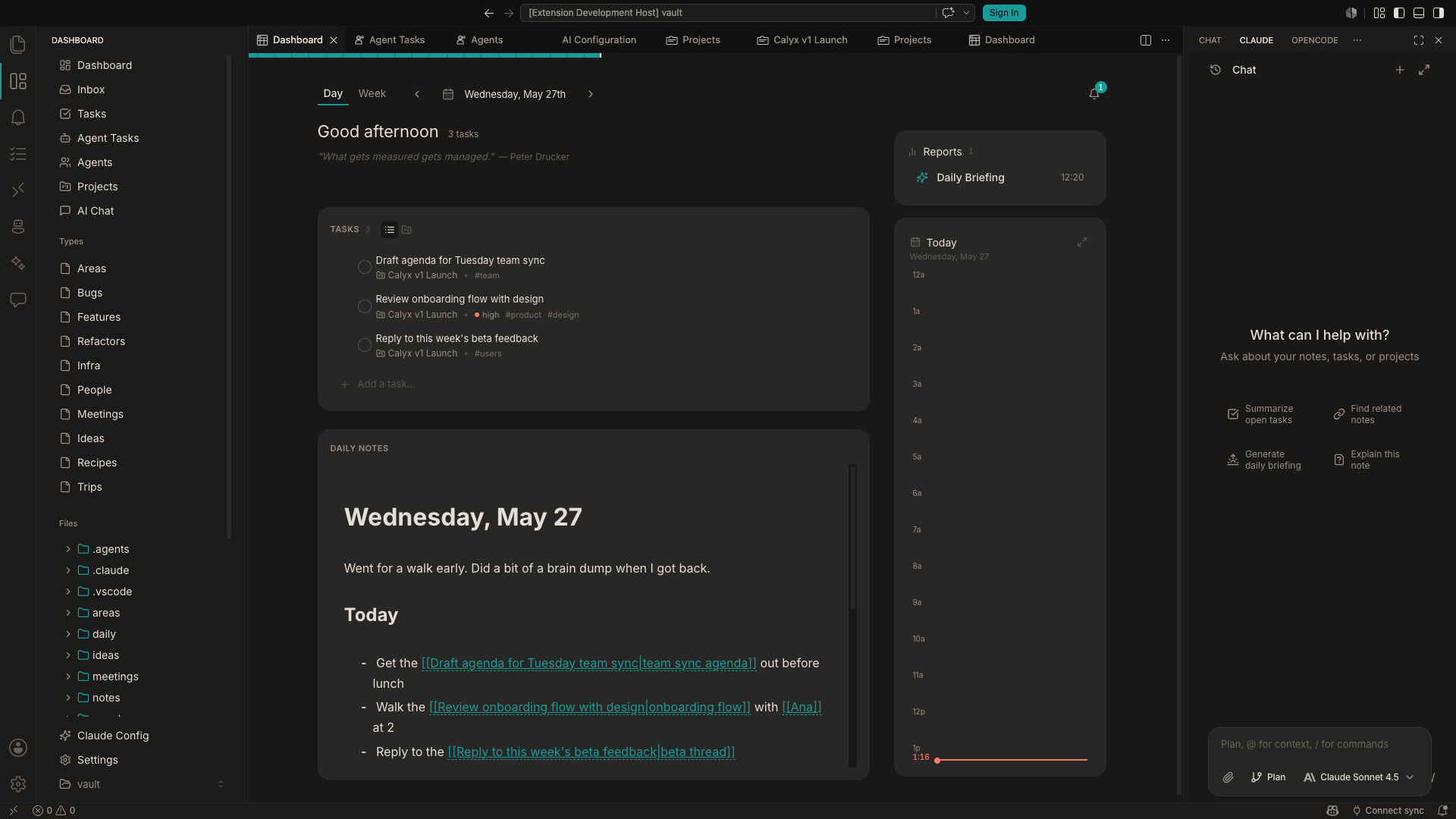
Open Calyx and land here. See tasks due today, recent files you've touched, and quick actions to create new content. The sidebar shows your entire vault — folders, projects, agents, custom content types. Everything opens in tabs in the main panel, so you can have multiple files open at once.
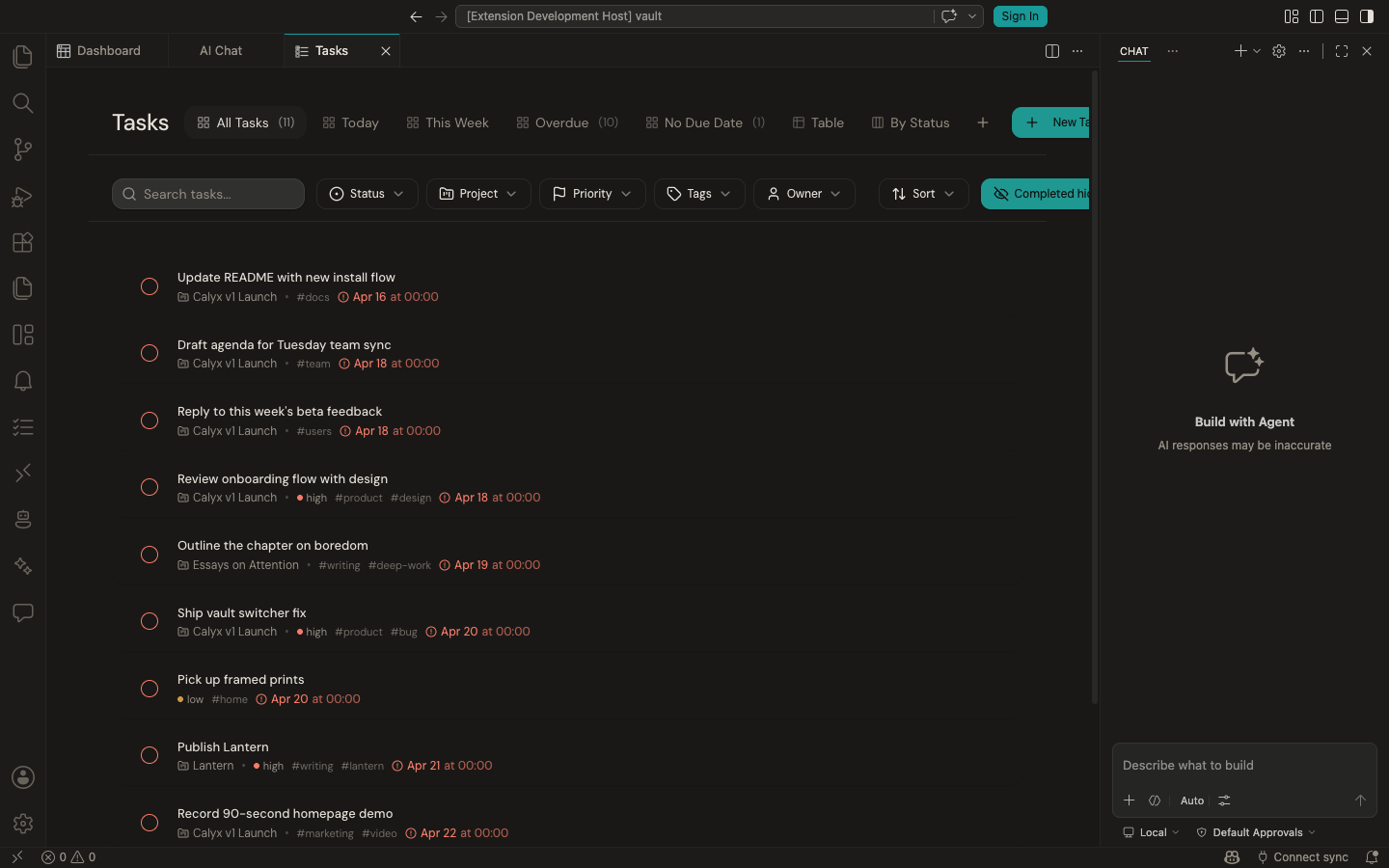
See every task in your vault. Filter by status (todo, in progress, done), project, priority, tags, or due date. Save filter combinations as named views. Click any task to open it and see the full markdown file.
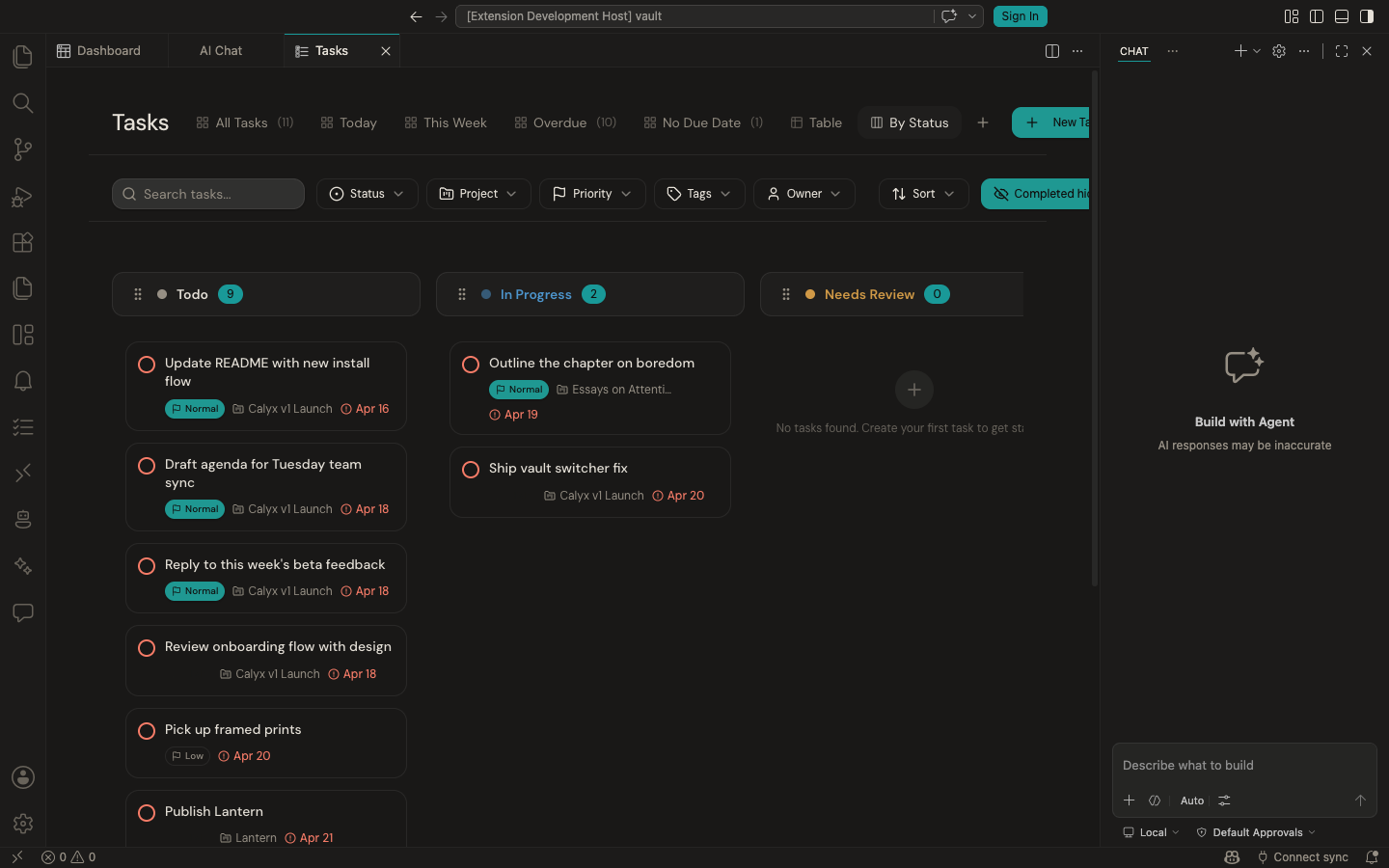
Switch to kanban view to see tasks grouped by status. Drag cards between columns to update status — the underlying markdown file updates automatically. Add custom columns like "Blocked" or "Waiting for review".
Create custom AI agents, manage reusable skills, configure Claude's persistent instructions. Agents are markdown files with persona and behavior definitions. Skills are prompt templates with triggers.
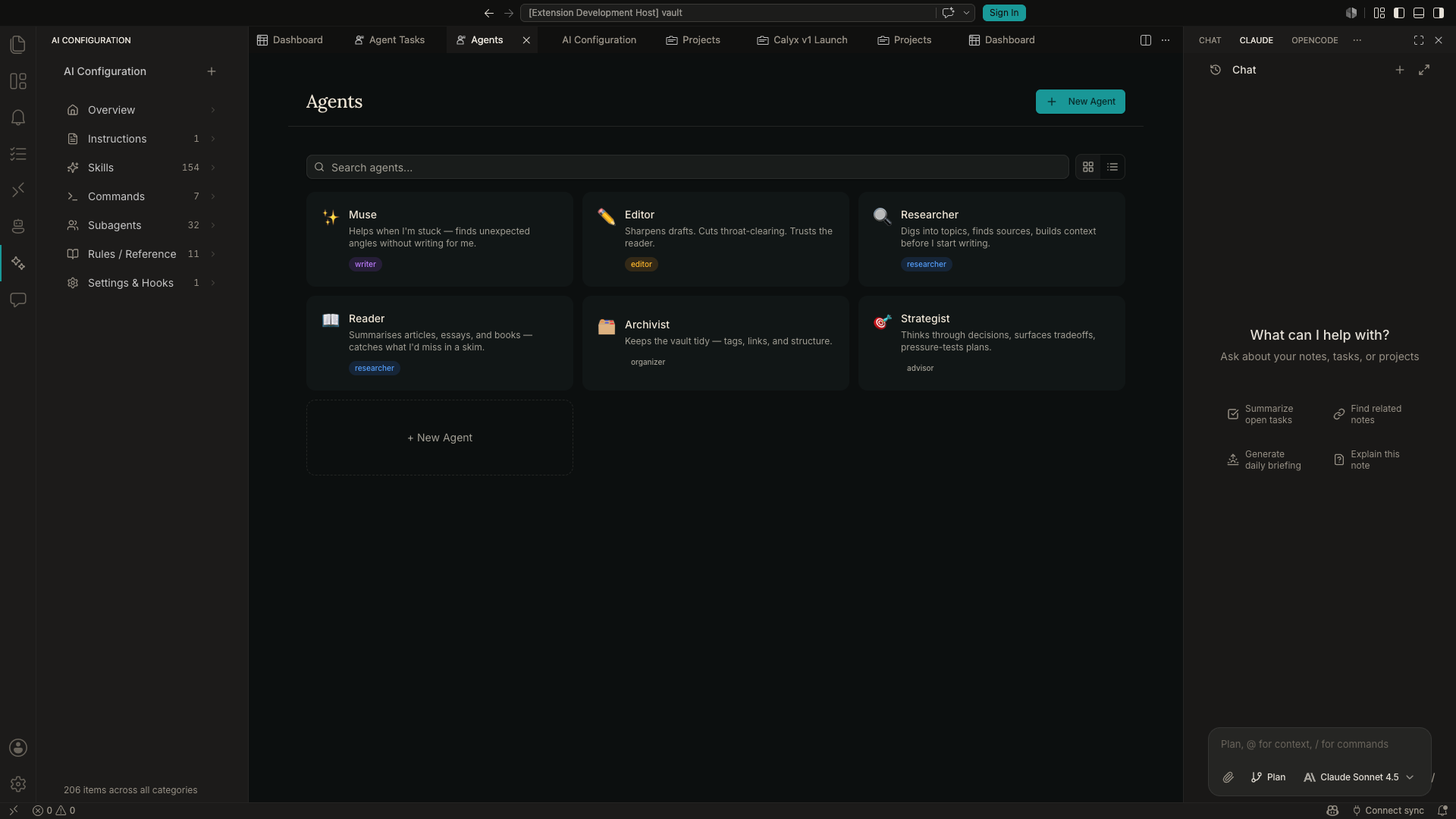
Define agents with their own persona, instructions, and model preferences. Bring your own API keys — Claude, OpenAI, Gemini, local models via Ollama. Route fast tasks to cheaper models, complex reasoning to frontier ones. Agents are markdown files you can version, share, or fork from others.
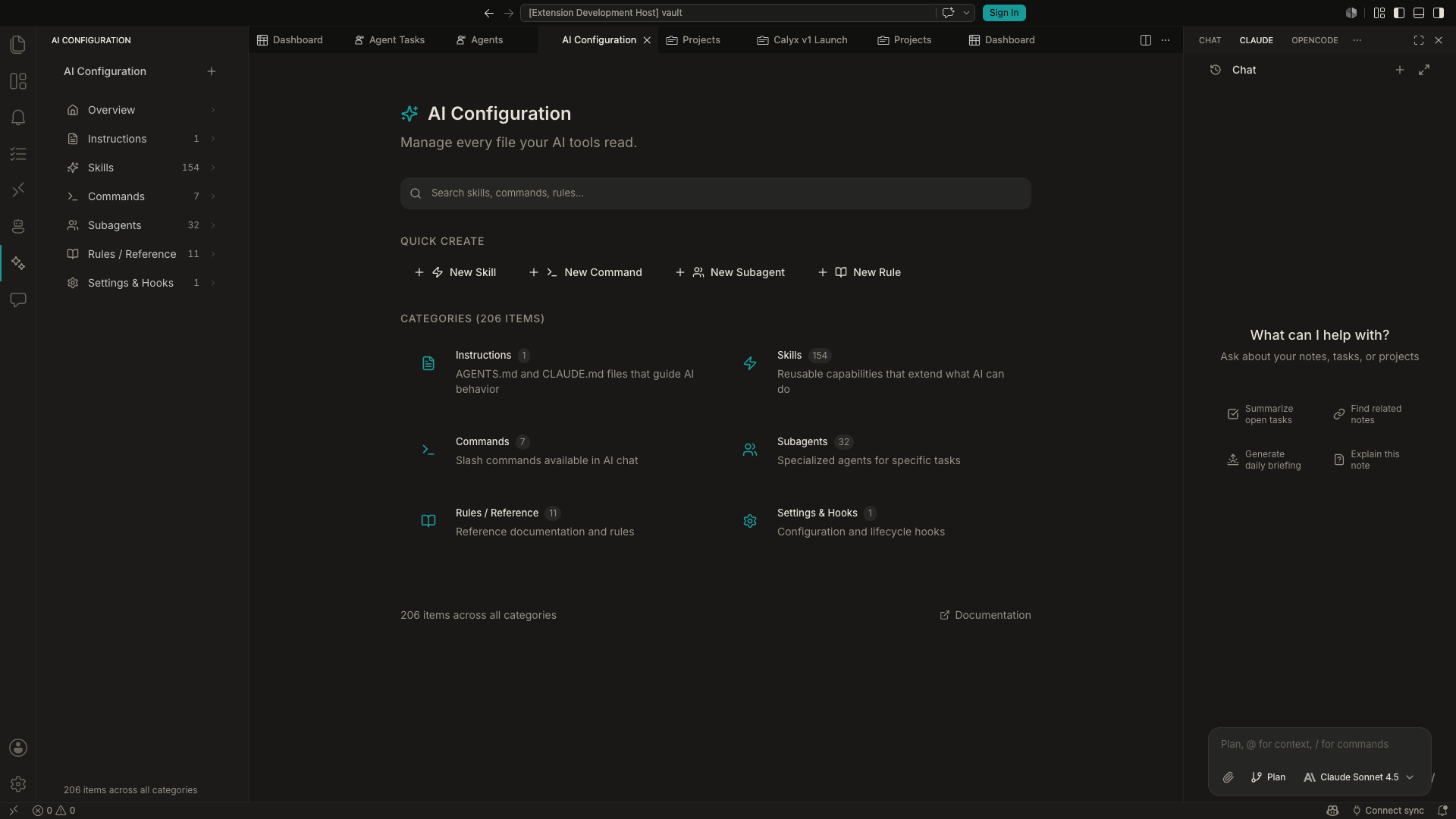
CLAUDE.md is a file that gives Claude persistent context — your projects, preferences, how you like things done. Skills are reusable prompt templates you can trigger with slash commands (like /weekly-review or /draft-feedback). This panel shows everything in one place: instructions, skills, and which sub-agents are available.
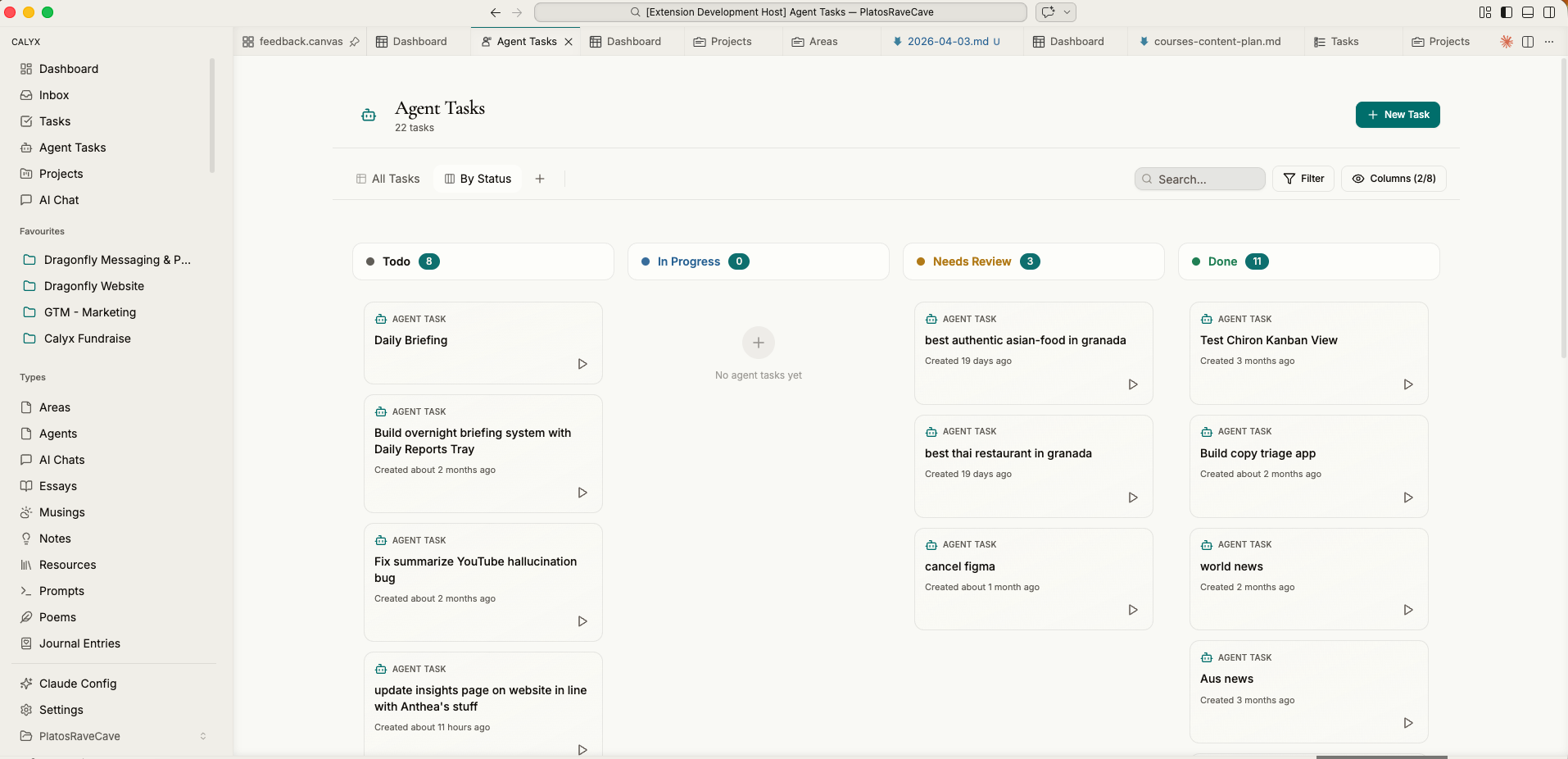
When you assign a task to an agent, it shows up here. The agent works through it autonomously — researching, drafting, whatever the task requires. When it's done, the task moves to "Needs Review". You read the output, approve it, or send it back with notes. Same kanban interface as your own tasks.
Projects, custom content types, and a rich markdown editor. Define your own schemas with YAML frontmatter. Create data views that filter and display any content type. Files are plain markdown — no lock-in.
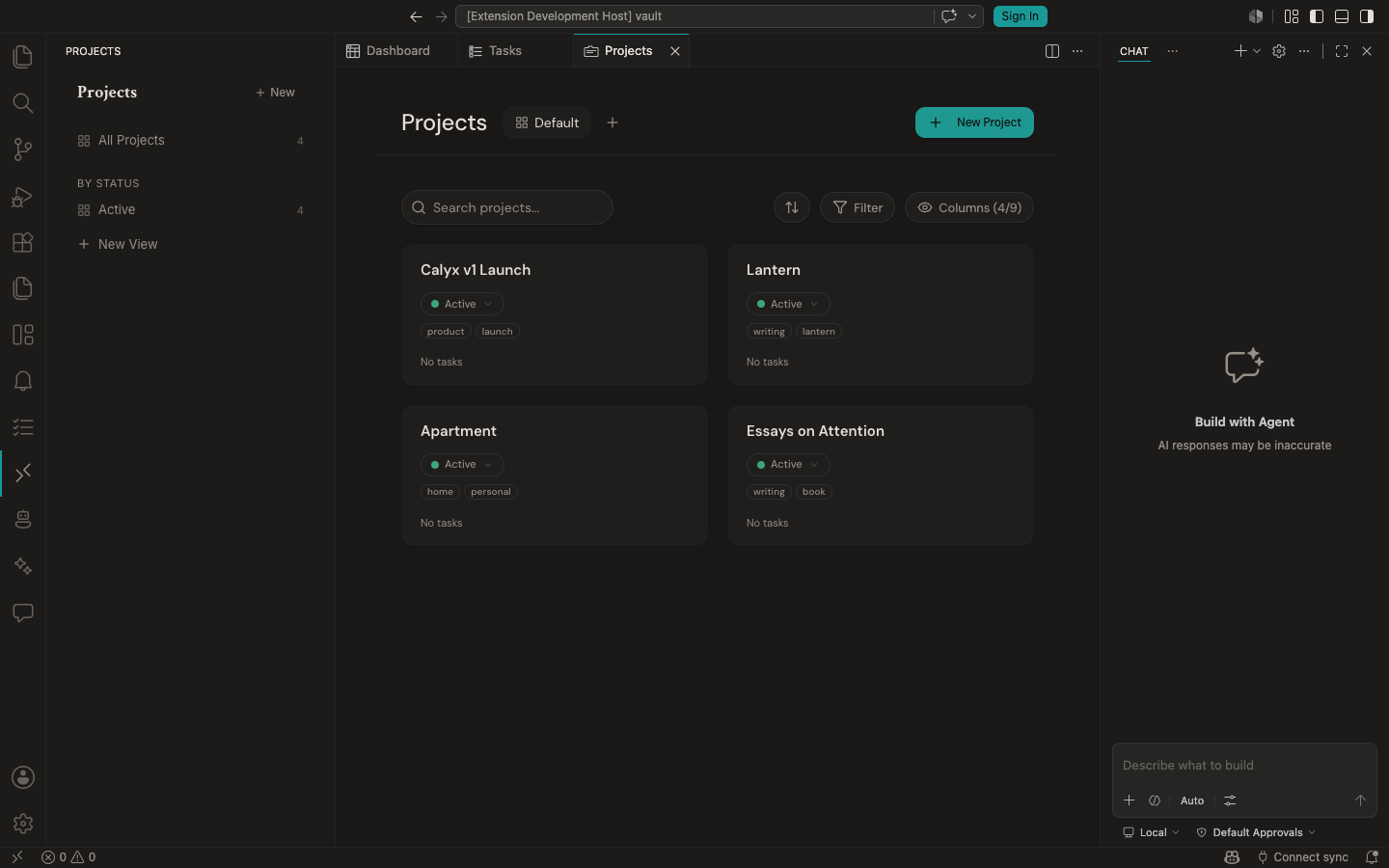
A project is a markdown file with metadata: status, area, tags, start date, overview. The cards view shows all projects at a glance. Click into one to see its tasks, notes, and files. Link tasks to projects using frontmatter — they'll show up in the project's task list automatically.
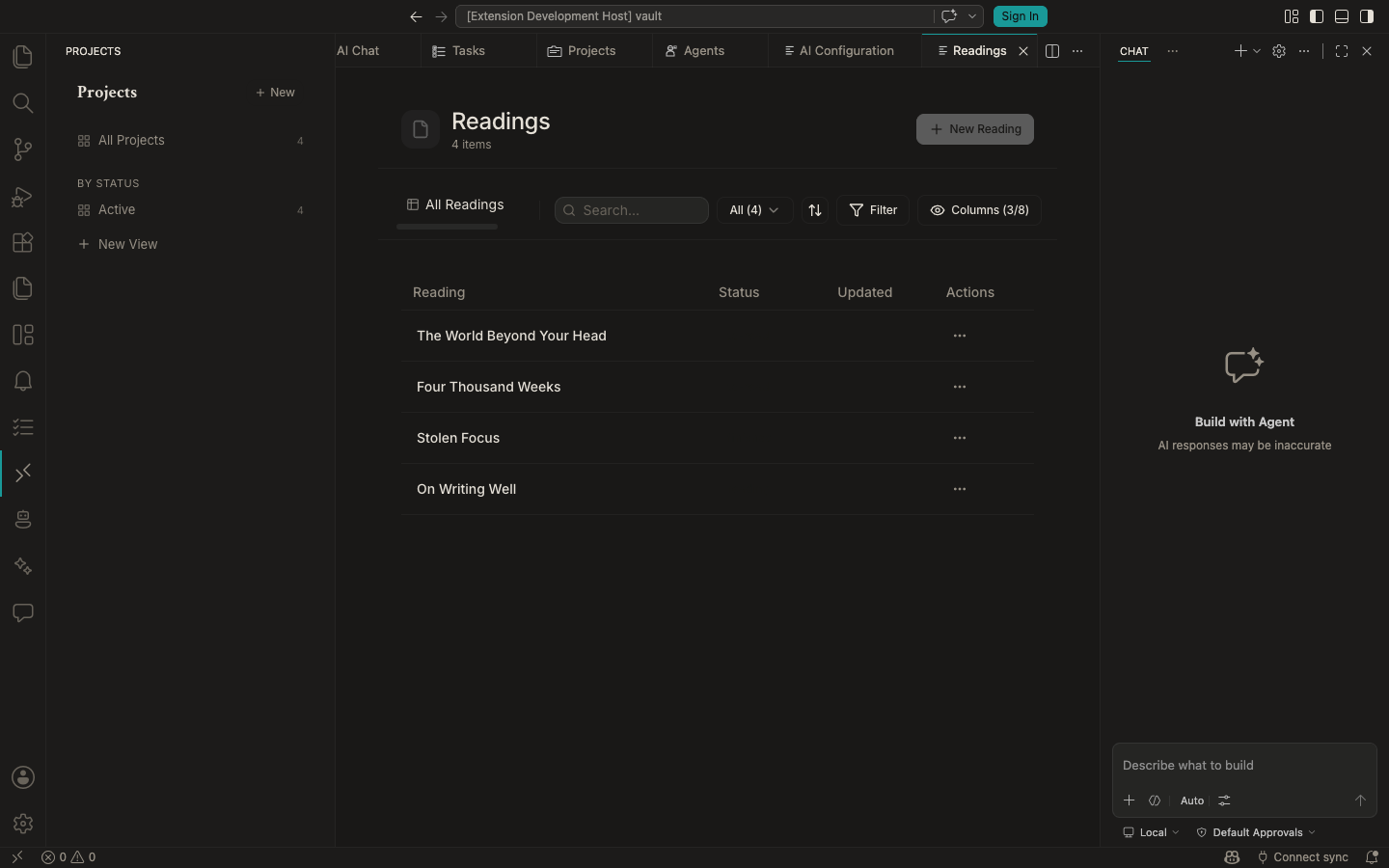
Not just tasks and projects — define your own types. Readings, contacts, recipes, research papers, whatever. Add fields in YAML frontmatter, create a .view file to display them as a table or cards. Filter, sort, group by any field. Your schema, your views.
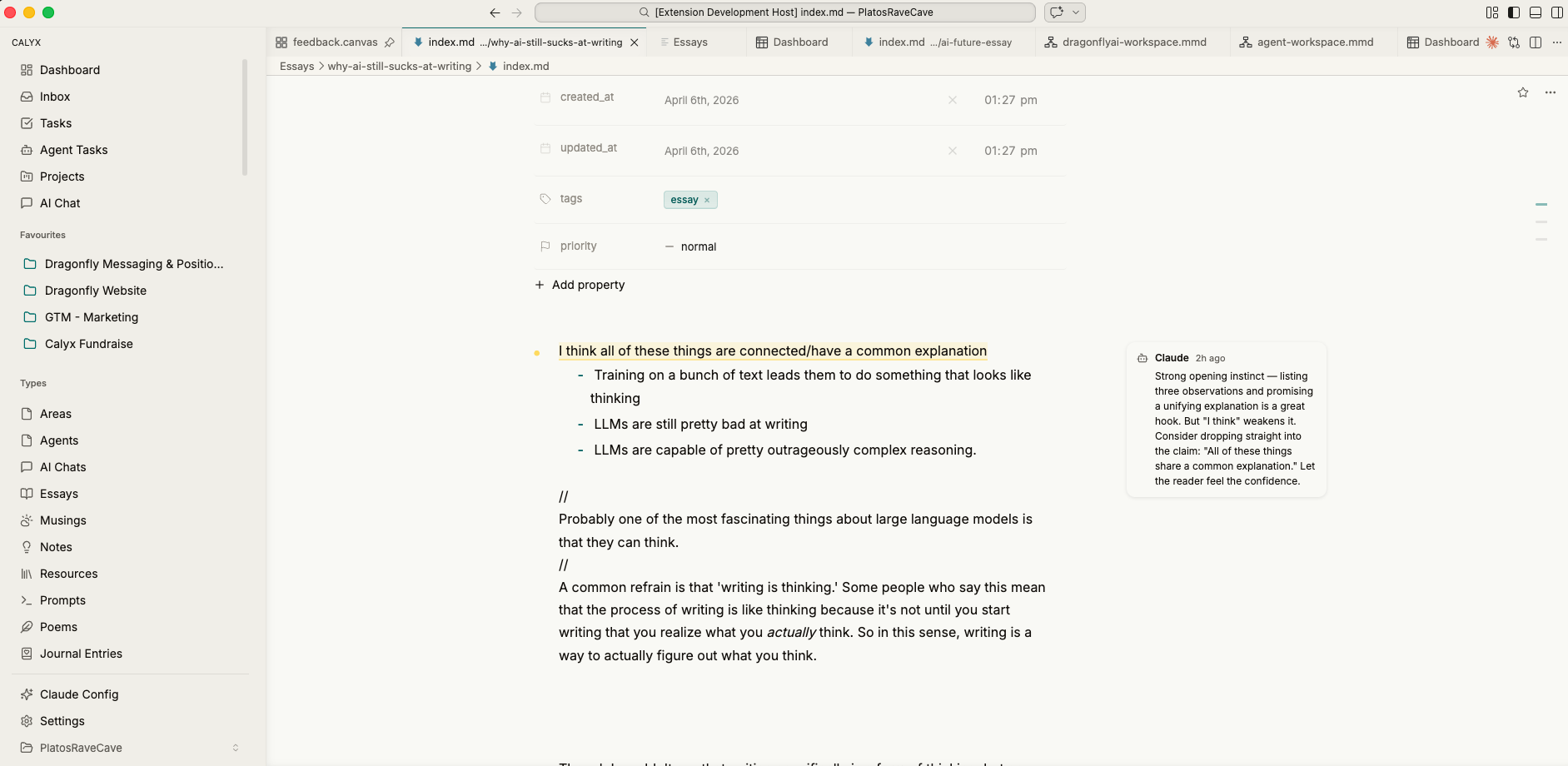
The editor supports full markdown with [[wikilinks]] to connect notes, block references to embed content, and inline formatting. Files stay as plain .md on disk — no proprietary format, no database. Agents can read and edit these files directly, which means your writing becomes context for AI without any export step.
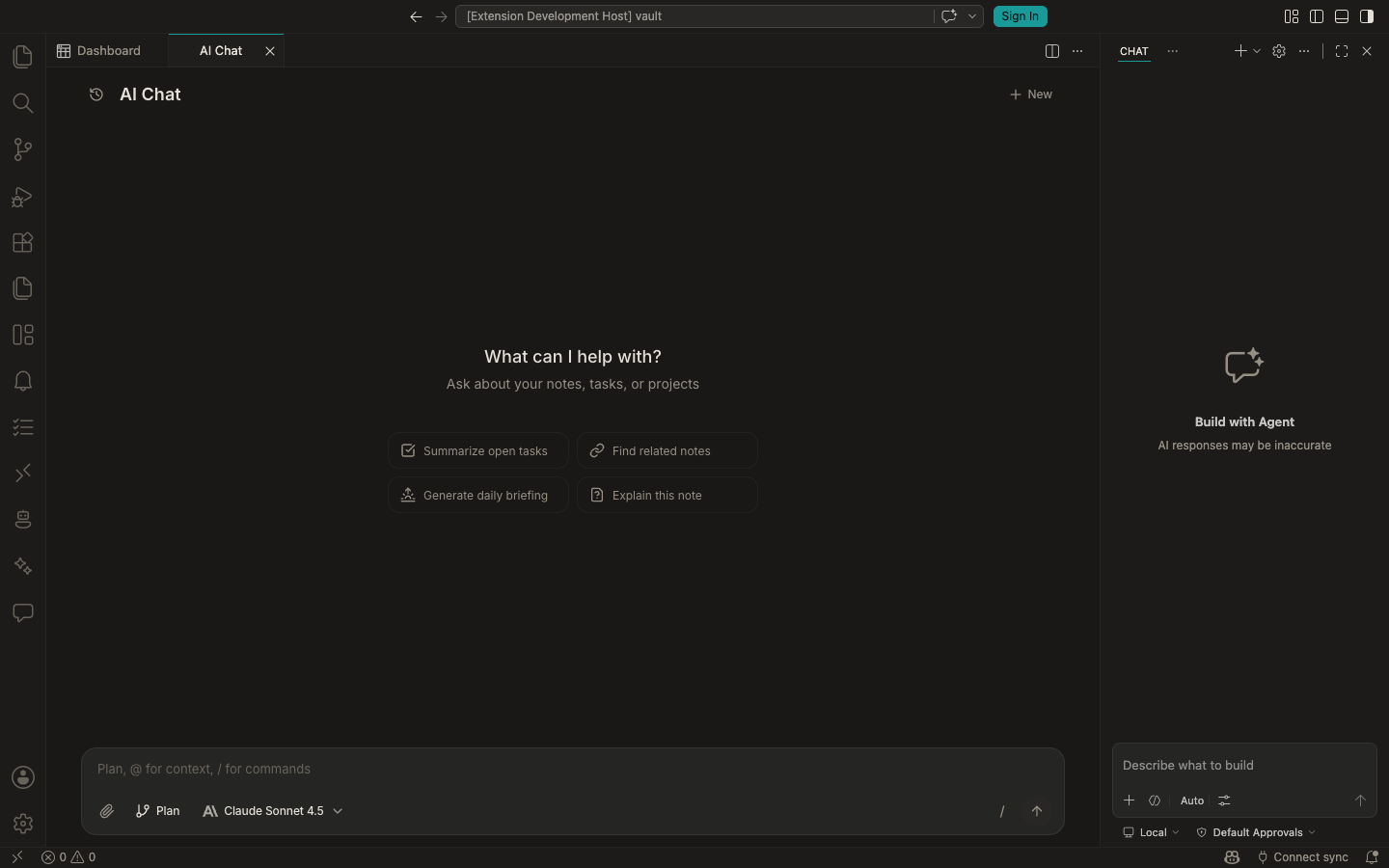
Chat interface with full vault context. Reference files with @mentions, run skills with slash commands, use quick actions for common tasks. Supports Claude (Anthropic) with bring-your-own-key.
The chat panel has full context of your vault — every file, task, project, and agent. Ask questions ("what did I write about X?"), run skills with slash commands (/weekly-review), or use @ to pull specific files into the conversation. Quick action buttons trigger common operations like "Summarize open tasks". You bring your own Anthropic API key.
Calyx isn't one app — it's a place other apps run. Anyone can build an app that runs inside the workspace and publish it to the marketplace (third-party ones like Pencil run there too), while companion apps reach in from outside. See all apps →
Presentations, reports, interactive experiences — generated by AI agents inside Calyx. These aren't mockups. They're actual artifacts created using the tools above.