Calyx isn't one app — it's a place other apps run. Some reach in from the outside world; others live inside the workspace. Both share the same files, the same context, the same AI.
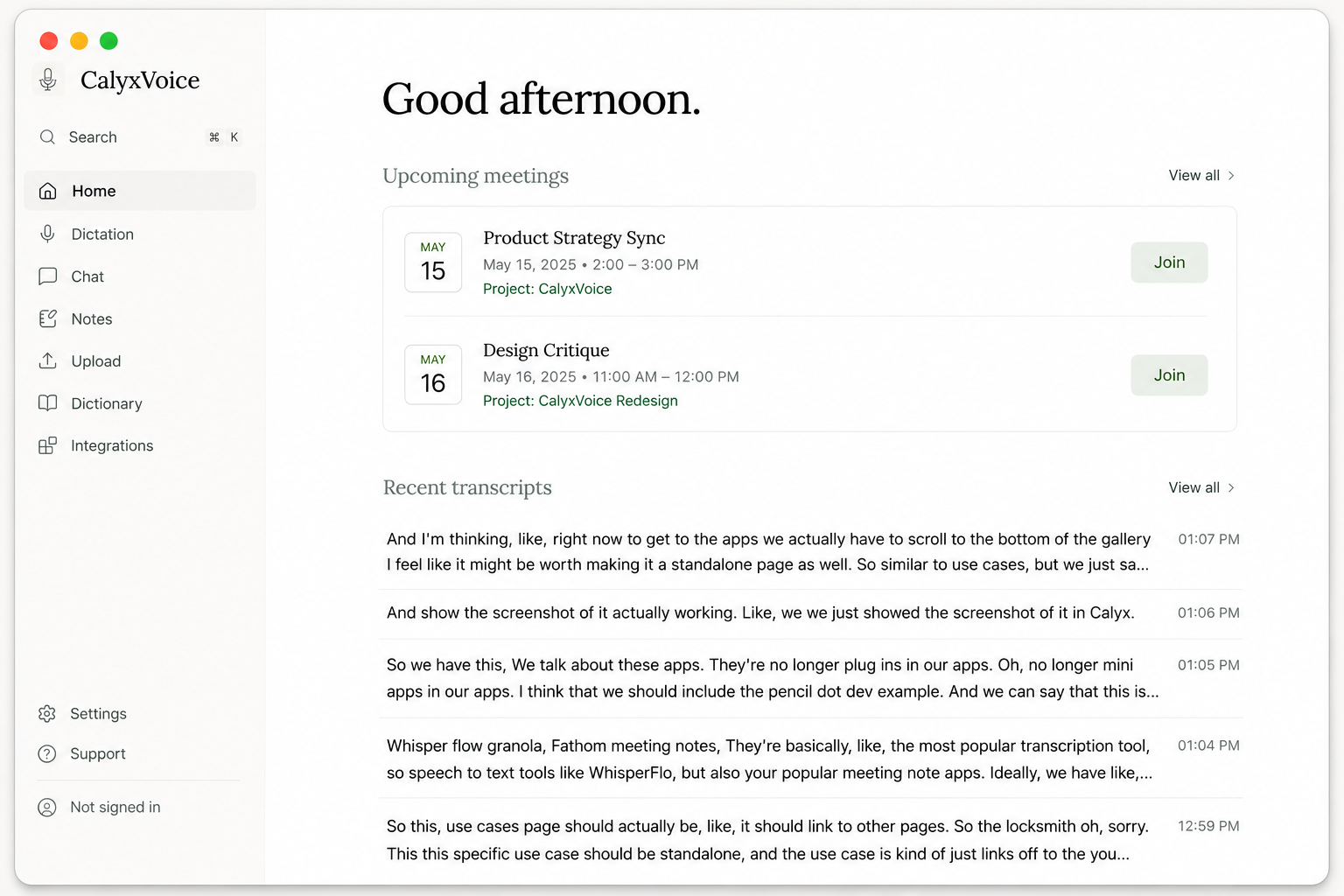
Calyx isn't only the app you open. Companion apps capture what happens away from the keyboard — meetings, voice, the hallway conversation — and file it back into the same vault. Different surface, shared context.
A desktop app that records and transcribes your meetings and turns your voice into text anywhere you type. It files speaker-attributed notes into your vault, tagged to the right project — then a coding agent can turn the conversation into tasks, follow-ups, and updated project notes.
See how it works →Apps run inside Calyx as native surfaces, right next to your files — not a tab switch, not a separate product. Describe what you want and build your own, install one someone else made, or run a third-party app like Pencil. They all share the same files, the same context, the same AI.
That's also the business. The Calyx marketplace lets anyone publish an app — some free, some paid — with Calyx taking a fee on every sale. It's a core revenue stream, and a moat that compounds with every app the community adds.
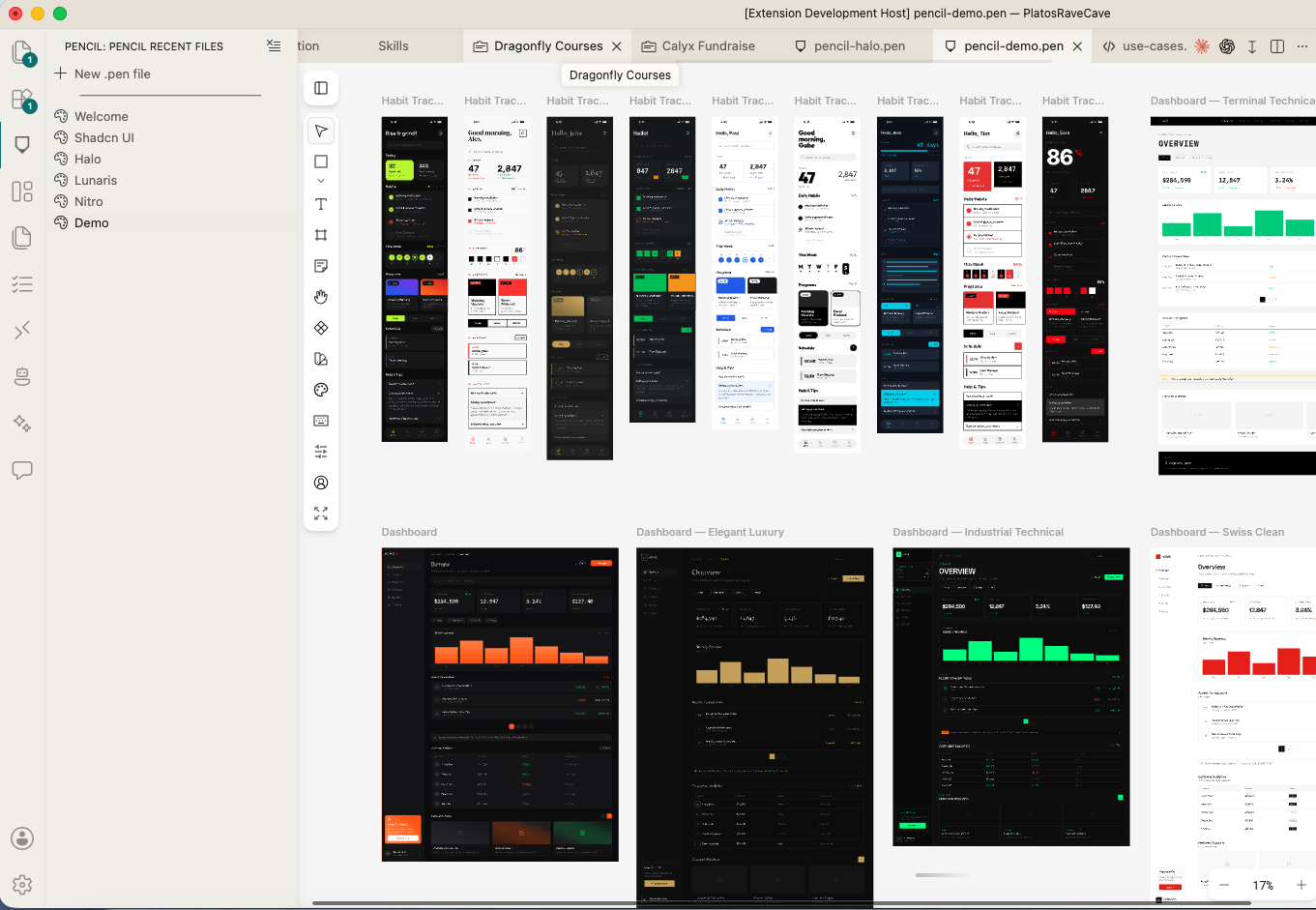
Pencil (pencil.dev) is an AI design tool for mocking up real, production-grade interfaces. It isn't ours — it's a third-party app — and it runs inside Calyx as a first-class surface. A designer mocks up a screen right beside the feature folder it belongs to, so the design sits in the same place as the code, the tasks, and the docs.
Proof the platform is open: bring the tools you already love, and they live where the work lives.
First-party apps that ship the same way — each a surface inside the workspace.