Your whole field, in context
I studied philosophy and got close enough to a PhD to take it seriously before deciding to build instead. So I know what it's like to wrestle a sprawling literature into something coherent — the papers in one place, the notes in another, the references in a third, the draft in a fourth, and nothing talking to anything else. Calyx puts the whole corpus in one place, as files an agent can actually read and think alongside you.
The literature is scattered; the tools don't talk
Your PDFs live in a reference manager. Your notes live in Obsidian. Your citations live in Zotero. Your draft lives in LaTeX or Word. Each one is a silo, and the connective tissue — the actual thinking across all of it — lives only in your head. The moment you want AI to help, you're back to copying and pasting between a dozen tabs, feeding it scraps with none of the context.
Everything in one corpus the AI can read
Drop your papers, notes, and drafts into one workspace. Because it's all just files, your coding agent has the whole corpus in context at once — it can read across hundreds of papers, follow the thread you're actually chasing, surface the three sources that genuinely disagree, and do it with receipts instead of inventing citations.
This is the idea I was writing about back in 2018 — using AI as a pathfinder to explore the possibility space of a problem, rather than grinding through it by hand. With your whole field sitting in the workspace, that finally becomes something you can do.
From a pile of papers to a living map
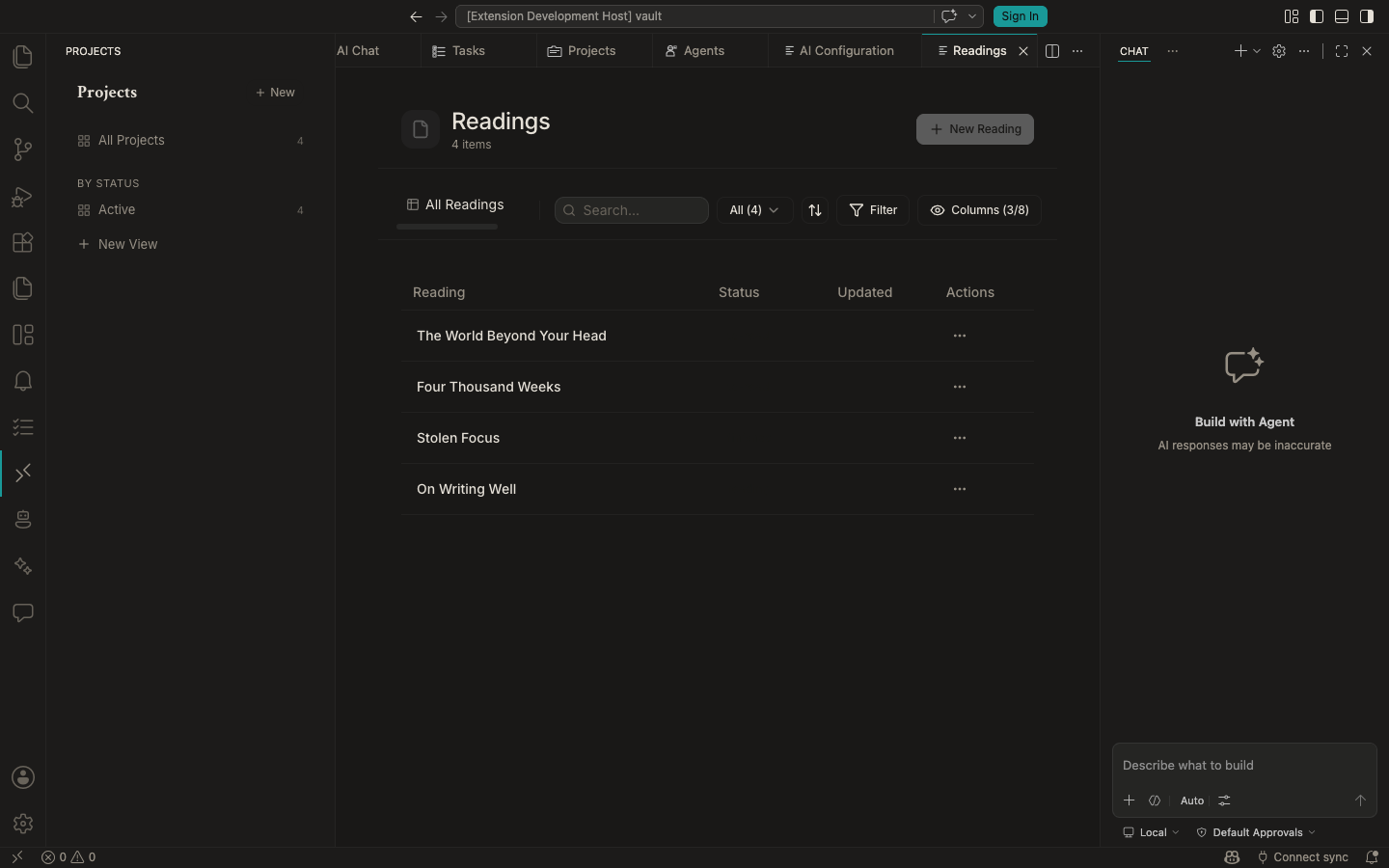
Wikilink concepts as you go, let the graph form, and have background agents keep it tidy as it grows — tagging, linking, and summarizing while you read. The synthesis stops being a heroic effort you put off until the end, and starts accumulating from the first paper.
Write with the sources right there
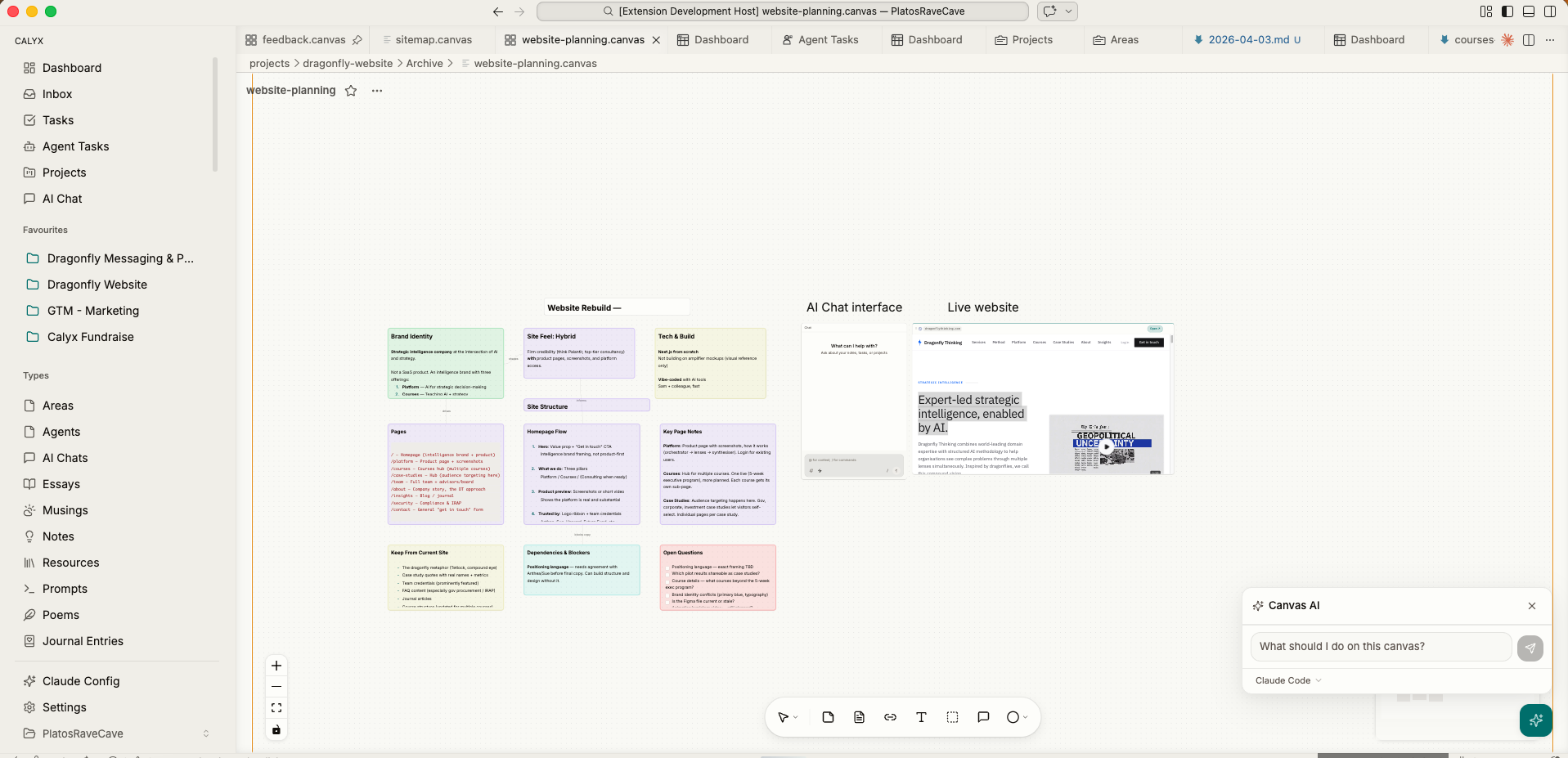
Draft in the same place your sources live. An agent that can see both your argument and your library can check a claim against what you've actually read, suggest the citation that backs it, and flag where you're overreaching. That's writing-to-think with the whole field at your elbow, and an agent that already has the context — so you're not re-explaining yourself to a blank chat window every time.
It's yours, and it lasts
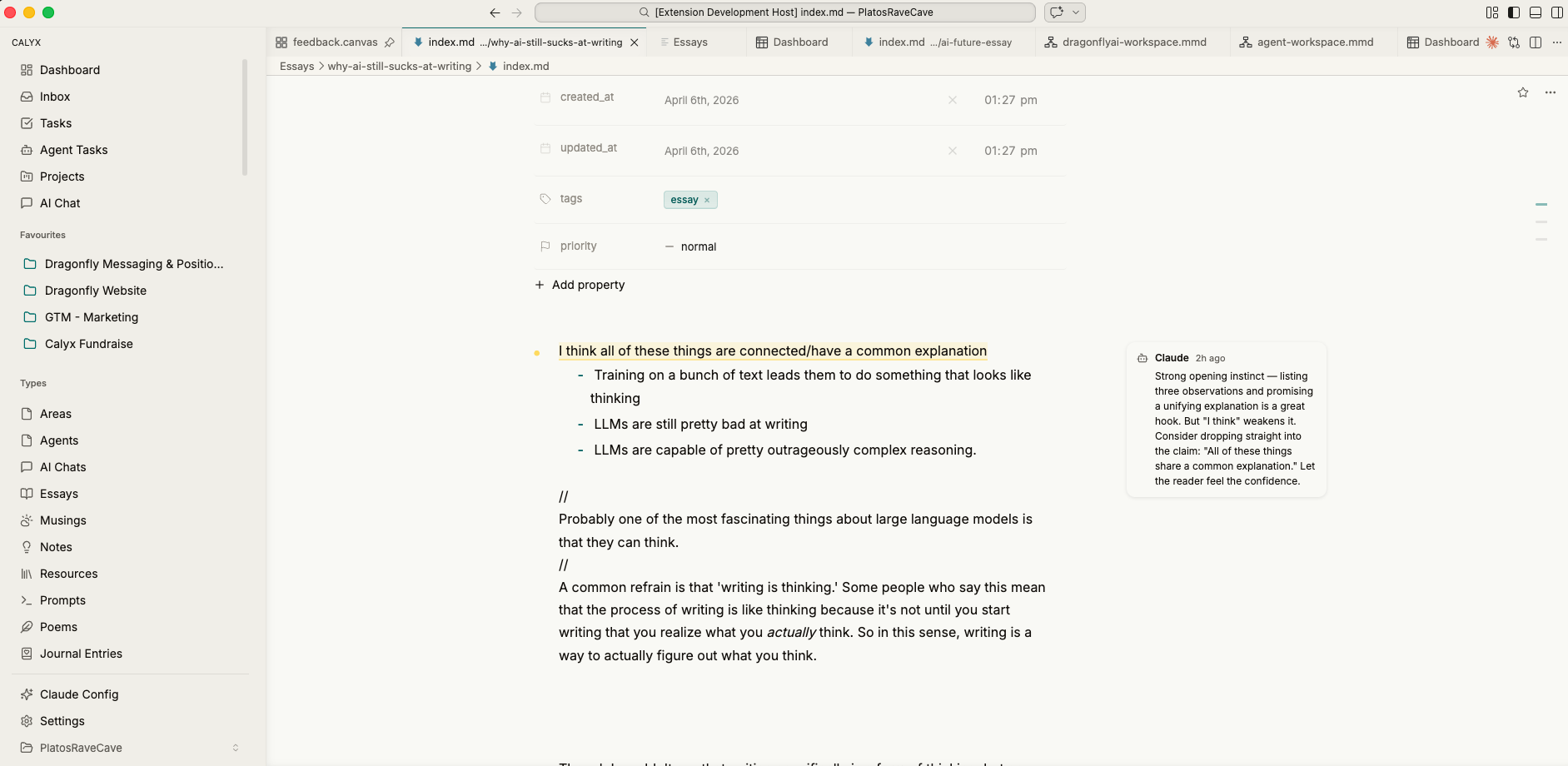
Local-first, plain files. A decade of reading and thinking shouldn't be trapped in a subscription that can sunset, or a proprietary format you can't get out of. Your corpus is markdown and PDFs in folders you own — on your machine, exportable, future-proof.
Read across everything
The agent works over your entire library at once — following threads and surfacing disagreements, not just summarizing one pasted excerpt.
Citations with receipts
Because the sources are right there, claims get checked against what you've actually read — and the citation that backs them is one suggestion away.
A graph that maintains itself
Background agents tag, link, and summarize as you read, so synthesis accumulates instead of piling up for the end.
Yours forever
Local-first, plain markdown and PDFs in folders you own. No lock-in, no format you can't escape, no subscription that can take it away.